
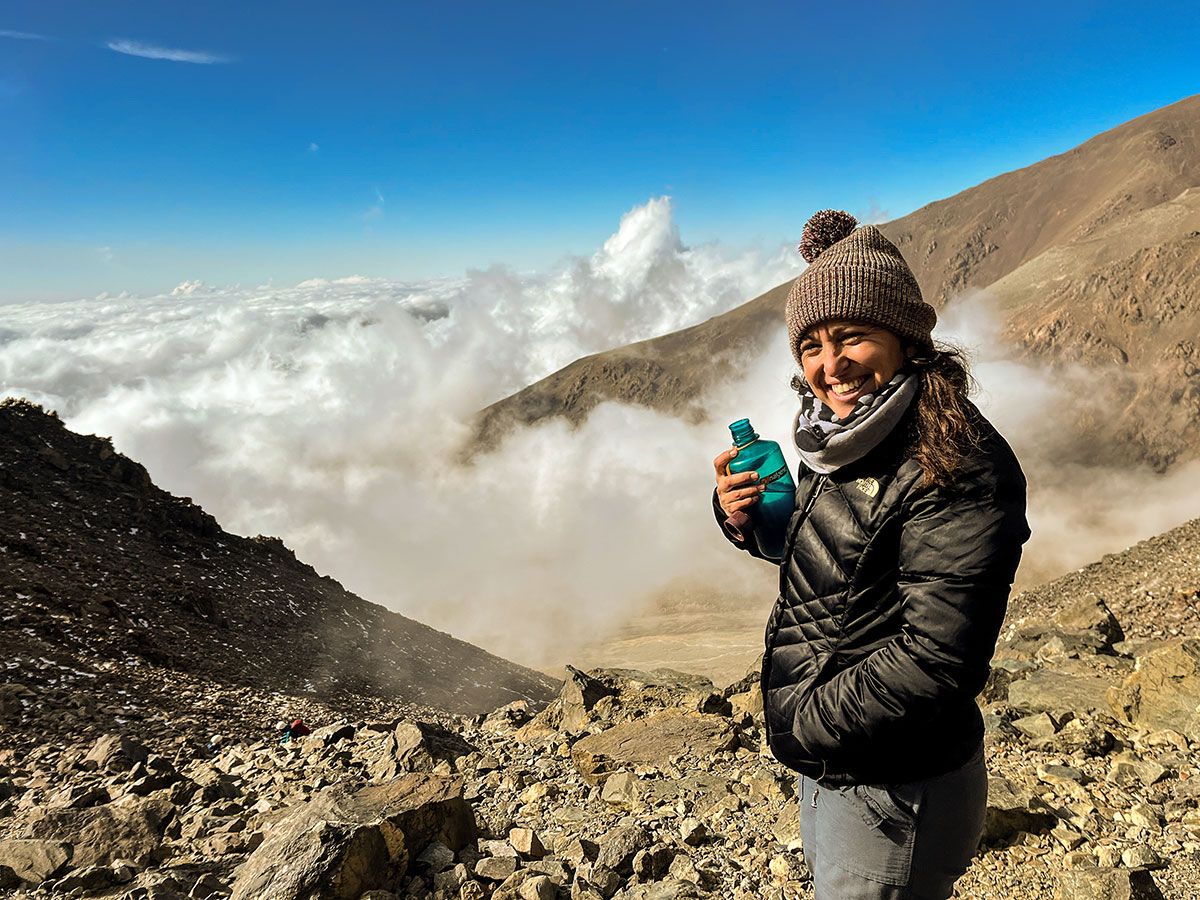
In short: Cerro Adolfo Calle stands at 4,272 m (14,016 ft) and Cerro Stepanek at 4,194 m (13,760 ft). They are two separate summits, close enough that you climb both on the same day. They sit in the Cordon del Plata, Mendoza, Argentina, and the trip runs three days with two nights in a mountain refuge at 2,900 m. No tent, no porters.
People search for them one at a time, which makes sense, because they are two names and two mountains. On the ground they are a single trip. Same refuge, same summit day, both tops before you walk back down.
This guide covers what people actually ask before signing up: how high each one is, where they are, how the days break down, what you need to have under your belt, and what the weather does up there. Dates and prices live on the trip page.
How high are Adolfo Calle and Stepanek?
Adolfo Calle reaches 4,272 m (14,016 ft) and Stepanek 4,194 m (13,760 ft). There are 78 metres between them, and both clear 4,000 with room to spare.
On summit day you climb Stepanek first, then Adolfo Calle, which is the higher of the two. The order is not arbitrary. Linked that way, the second summit sits close to the first, so the altitude you have already gained goes to work instead of going to waste.
Two summits instead of one changes what you take home. You finish the day with two peaks above 4,000 metres in the logbook, which almost no three-day trip will give you.
Where are they?
In the Cordon del Plata, in the province of Mendoza, inside the provincial park of the same name. The trip starts in the city of Mendoza, a little over an hour from the trailhead.
One thing worth getting right, because it often gets repeated wrong: the Cordon del Plata is not foothills. It belongs to the Frontal Range of the Andes, and its summits run from 3,000 m to nearly 6,000 m. This is the same corner of Mendoza that people pass through on their way to bigger objectives. Adolfo Calle and Stepanek are the lower rungs of that range, not a warm-up range sitting in front of it.
If you want the wider picture of the valley, with its refuges and the full list of summits, that is in the Vallecitos guide.
How long does the trip take?
Three days from the city of Mendoza, with two nights at the base refuge at 2,900 m (9,514 ft). Day two is the big one: 10 km and 1,300 m of ascent.
| Day | What happens | Distance and ascent |
|---|---|---|
| Day 1 | Meet in Mendoza, transfer, walk up to the refuge | 3.3 km · +340 m |
| Day 2 | Summit day: Stepanek, then Adolfo Calle | 10 km · +1,300 m |
| Day 3 | Descent and return to the city | downhill |
Day one is deliberately short. You get to the refuge in daylight, sort your kit, and spend a night at 2,900 m before asking anything serious of your body. That night is what makes the next day work.
Do you sleep in a tent?
No. You get two nights in a mountain refuge at 2,900 m, in shared bunk rooms, with hot showers. You bring your own sleeping bag.
This is what separates the trip from an expedition. You climb two peaks over 4,000 metres without hauling a tent, a stove, or camp gear. You go up with a day pack and come back to a bed.
Nights at 2,900 m get a lot colder than the afternoon suggests, so check the comfort rating on your sleeping bag rather than the extreme rating printed on the tag. The extreme number is a survival figure. It has nothing to do with sleeping well.
What is the weather like up there?
High mountain weather: dry, windy, and colder than the forecast reads. Summer nights at the refuge drop below 10 °C, and there can be snow above 4,000 m at any time of year. Wind is what decides summit day.
There is a simple reason this comes up so often. At 4,200 m the thermometer says one thing and the wind says another. A day of hard gusts turns a workable temperature into a reason to turn around.
That is why the summit call gets made on the morning, with the forecast in hand, and not the week before. The season runs long. The day itself gets decided up there.
How hard is it, and what experience do you need?
The grade is demanding, but the demand is physical and altitude related, not technical. There is no climbing and nothing that calls for a rope. What there is: 10 km and 1,300 m of ascent in one push, above 4,000 metres, and roughly 12 hours on the move.
You do not need previous altitude experience, and that is the point of the trip. It is one of the few objectives that puts you above 4,000 m without asking you to have been there first. What helps is coming off your feet fit. A couple of long days with a pack, or a steady habit of full-day walks, is the sensible baseline.
To arrive ready rather than hopeful, the 30, 60 and 90 day training plan is built for exactly this kind of long single day.
Where does it fit in your progression?
It is the altitude test you take before an expedition. Three days tells you how your body handles 4,000 m, with a city an hour away if the answer turns out to be badly.
The ladder in this valley is easy to read. After these two summits comes Cerro del Medio at 4,170 m, run as an expedition, and then Cerro Vallecitos at 5,468 m, which is where a lot of people meet their first 5,000er.
If you want to understand why your body reacts differently on each of those, it is worth reading about the stages of acclimatisation.
What do you need to bring?
Broken-in hiking boots, a day pack for the summit push, three layers, mountain gloves and hat, high factor sunscreen, sunglasses, two litres of water, and a sleeping bag for the refuge.
Above 4,000 m the snow throws the sun back at you with a harshness that catches people out, so sunscreen and proper sunglasses are not optional extras. And since summit day runs long, wear boots you have already walked in. This is not the place to break in a new pair.
Group equipment, food and logistics are on us. We send the full packing list before every departure, so you do not buy things you will never use.
Frequently asked questions
How high is Cerro Adolfo Calle?
4,272 metres above sea level, or 14,016 feet, in the Cordon del Plata, Mendoza. It is the higher of the two summits on this trip.
How high is Cerro Stepanek?
4,194 metres above sea level, or 13,760 feet. It sits next to Adolfo Calle and you climb it first, on the same day.
Are Adolfo Calle and Stepanek the same mountain?
No. They are two separate summits, 78 metres apart in height, close enough to link in one day. That is why they are almost always named together.
Where are Adolfo Calle and Stepanek?
In the Cordon del Plata, province of Mendoza, Argentina, inside the provincial park. This is not a foothill range: the Cordon del Plata is part of the Frontal Range of the Andes.
How many days does the ascent take?
Three days from the city of Mendoza, with two nights at the base refuge at 2,900 m. Summit day is 10 km with 1,300 m of ascent.
Do you sleep in a tent?
No. Both nights are in a mountain refuge, in shared bunk rooms with hot showers. Bring your own sleeping bag. You carry no tent and no camp gear.
What is the weather like on Cerro Stepanek?
Dry, windy high mountain weather, with cold nights even in summer and possible snow above 4,000 m at any time of year. Wind is the deciding factor on summit day, and the call is made that morning with the forecast in hand.
Do I need previous altitude experience?
No. This is one of the few objectives that takes you above 4,000 m without requiring prior altitude. Being fit on your feet does help: a two-day trek with a pack, or a run of long day walks.
How much does the trip cost?
Current pricing, open dates and everything included are on the Adolfo Calle and Stepanek trip page, which is updated for every departure. Dates are also on the calendar.
Still deciding? Message us on WhatsApp at +54 9 3512 11-3842 and we will get back to you.